The Short Answer
A boom pump uses a hydraulic arm to place concrete quickly over obstacles or at height. This makes it ideal for large, complex or hard-to-reach pours. A ground line pump pushes concrete through flexible hoses laid along the ground. This suits smaller jobs, tighter access and lower-cost domestic work.
If you are planning a concrete pour, choosing the right pump can affect cost, speed, labour and site efficiency. The wrong choice can slow the job, create access issues, or leave you paying for equipment you do not need. The good news is that the decision is usually simple once you understand how each system works.
At Elite Concrete, we help customers match the right concrete pumping solution to the site, pour size and access available. Whether you are arranging a house extension, a garden slab, foundations or a larger commercial project, knowing the difference between a boom pump and a ground line pump will help you plan with confidence.
Boom Pump Vs Ground Line Pump: The Main Difference
The main difference is how the concrete moves from the lorry to the pour location.
- Boom Pump: Uses A remote-controlled hydraulic arm, called a boom, to place concrete where it is needed.
- Ground Line Pump: Uses Flexible pipes and hoses laid along the ground to move concrete to the pour point.
- Placement Method: Hydraulic Arm
- Best For: Large, High Or Complex Pours
- Access Needs: More Setup Space And Overhead Clearance
- Speed: Very Fast On Larger Pours
- Labour Required: Often Less Manual Handling
- Typical Cost: Usually Higher
- Placement Method: Ground Hoses And Pipes
- Best For: Smaller Domestic And Tight-Access Jobs
- Access Needs: Less Overhead Space, Flexible Ground Routing
- Speed: Steady, Often Slower Than Boom Pumps
- Labour Required: May Need More Hose Handling On Site
- Typical Cost: Usually Lower
What Is A Boom Pump?
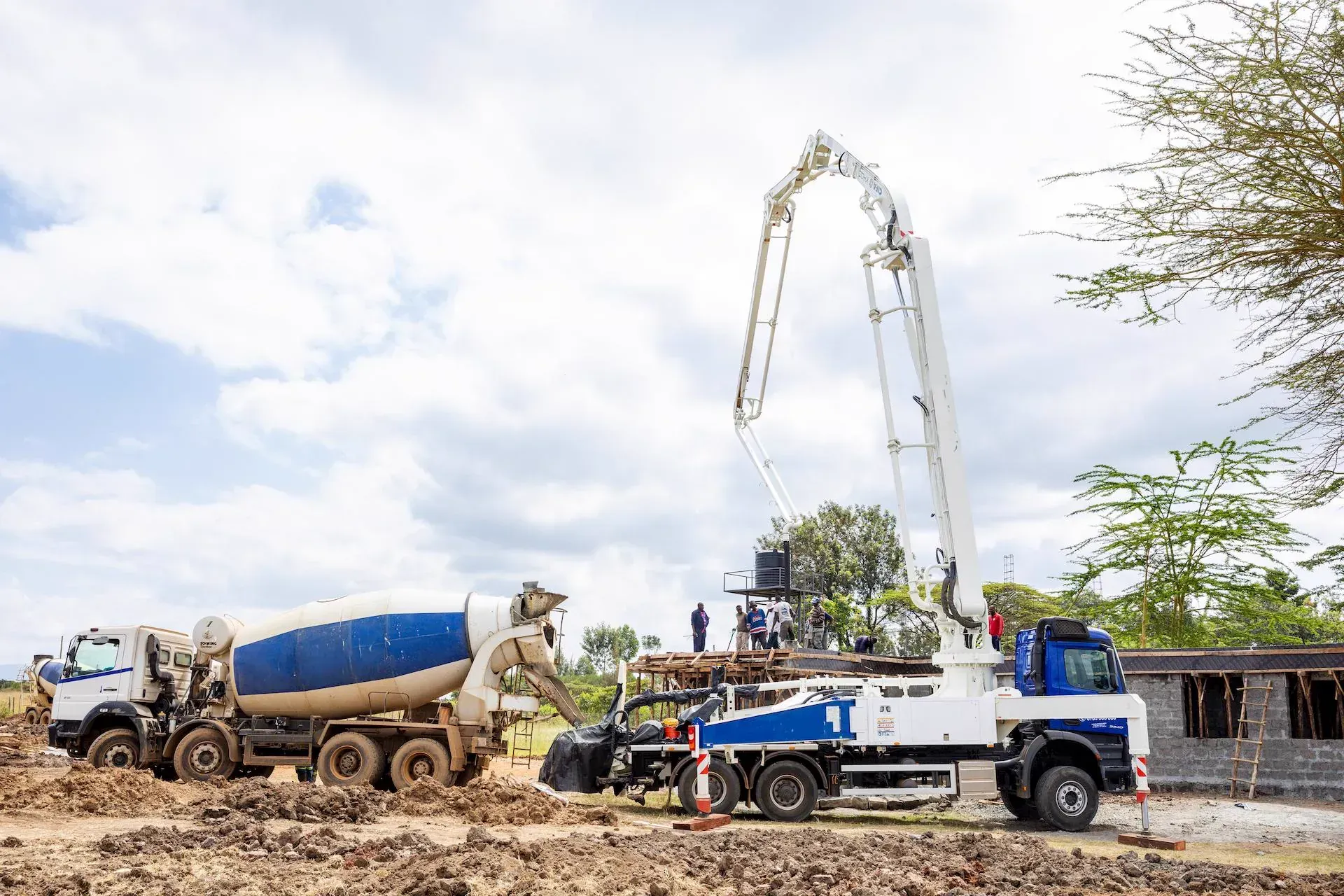
A boom pump is a concrete pump mounted on a vehicle and fitted with a multi-section hydraulic arm. The arm unfolds and extends to carry concrete directly to the pour area.

How A Boom Pump Works
Concrete feeds from the mixer into the pump hopper. The pump then pushes it through pipelines attached to the boom arm. An operator controls the arm and positions the end hose over the slab, formwork or foundation.
This makes boom pumps especially useful when concrete must be placed:
- At Height: Such As upper floors or elevated structures.
- Over Obstacles: Such As walls, garages, neighbouring buildings or restricted ground areas.
- Across Large Areas: Where quick coverage improves programme efficiency.
Best Uses For A Boom Pump
- Commercial Slabs: Large Pours where speed matters.
- Multi-Storey Construction: Projects Requiring vertical reach.
- Basements And Complex Foundations: Sites With limited direct access.
- Obstacle-Heavy Locations: Jobs Where the pour point cannot be reached easily by lorry or wheelbarrow.
If your site is large, busy or difficult to access, a boom pump can save time and reduce manual effort.
What Is A Ground Line Pump?
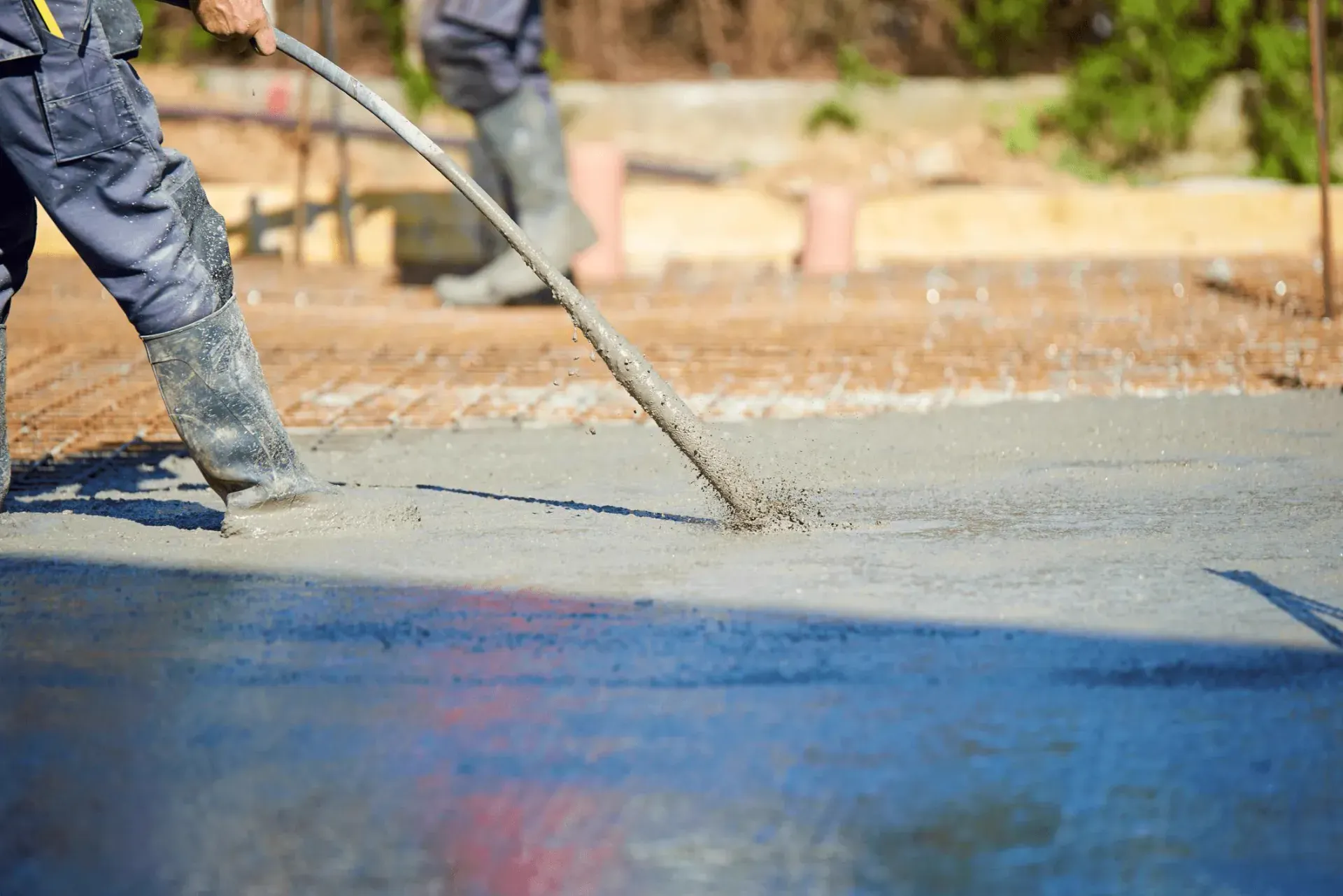
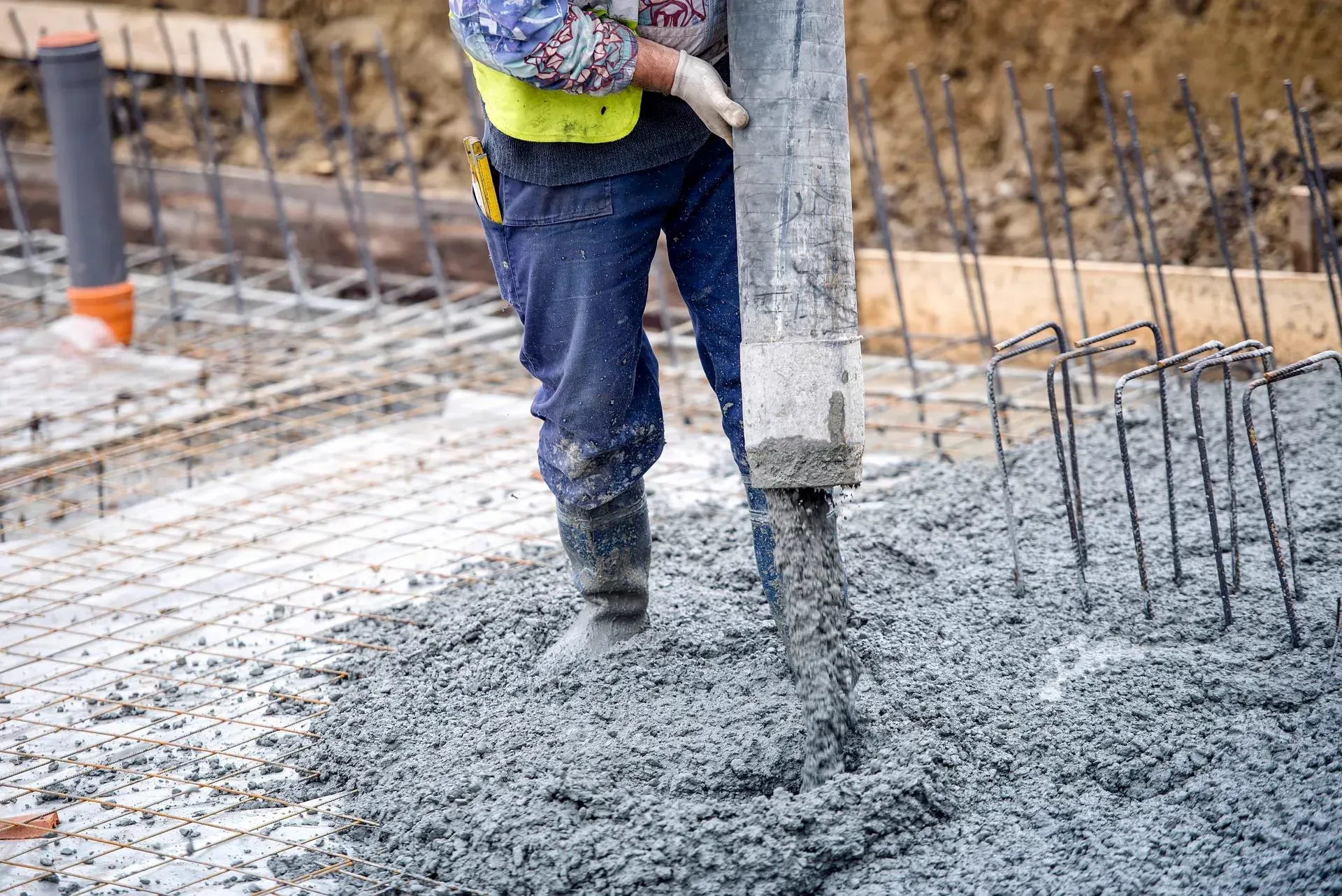
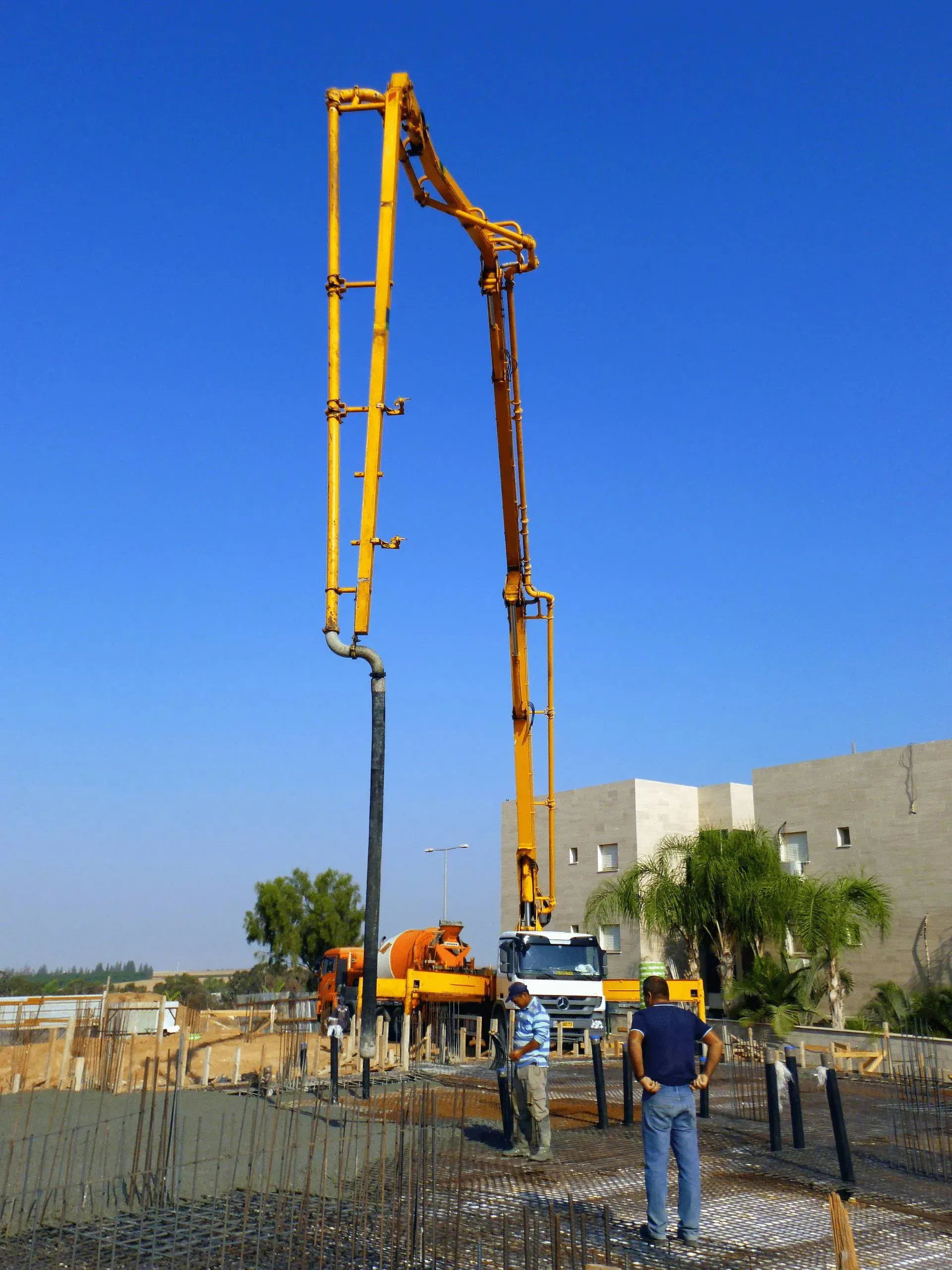
A ground line pump, often called a line pump, moves concrete through steel pipes and flexible hoses laid along the ground from the pump to the pour point.
How A Ground Line Pump Works
The pump pushes concrete from the hopper into a connected line of pipes and hoses. These lines can run across the site, around corners or through access points until they reach the required location. The discharge hose is then directed to where the concrete needs to go.
This method is practical because the hose route can adapt to site conditions without needing a large boom overhead.
Best Uses For A Ground Line Pump
- House Extensions: Ideal For rear and side extension foundations.
- Patios And Garden Slabs: Useful Where access through the property is limited.
- Driveways And Footings: Suitable For straightforward domestic pours.
- Small To Medium Sites: A Good balance of access flexibility and cost.
For many domestic concrete pumping jobs, a ground line pump is the practical and economical option. You can explore concrete pump hire if you are comparing options for your site.
Key Differences Between A Boom Pump And A Ground Line Pump
Reach And Placement
A boom pump offers greater reach because the hydraulic arm can extend over buildings, fences and other obstacles. It also allows precise placement across a wide working area.
A ground line pump depends on how far and how well hoses can be laid. It can still reach difficult areas, but the route must work at ground level. Longer hose runs can also affect setup time and planning.
Site Access And Setup
Boom pumps need enough space for the vehicle to position safely and for the boom to unfold. You must also consider overhead obstructions such as trees, scaffolding and power lines. The Health and Safety Executive provides useful UK guidance on safe planning and operation on construction sites.
Ground line pumps are often easier to use on tight domestic sites because hoses can run along paths, drives or side access routes. However, the hose layout still needs planning to avoid trip hazards, obstructions and extra handling.
Speed And Labour Requirements
On larger pours, boom pumps are generally faster. They can place high volumes of concrete quickly and reduce the need for workers to move hoses over long distances.
Ground line pumps can be highly efficient on smaller jobs, but they may involve more manual hose management, especially if the route is long or changes direction several times.
Project Size And Complexity
Boom pumps suit larger and more complex projects where rapid placement and high reach are essential. Ground line pumps suit small to medium pours where the layout is awkward but the scale does not justify a boom.
Cost Considerations
In most cases, boom pump hire costs more than ground line pump hire. However, the cheapest hourly rate is not always the lowest overall cost.
Cost is influenced by:
- Pour Size: Larger Pours may justify a boom pump because of time savings.
- Access Restrictions: Difficult Access can increase setup complexity.
- Reach Required: Greater Distance or height may favour a boom pump.
- Labour Savings: Faster Placement can reduce site labour time.
- Programme Pressure: On Busy sites, speed may be worth the higher pump cost.
Concrete supply also matters. Depending on the project, ready-mix concrete or volumetric concrete may suit your pumping plan better, especially when timing and quantity control are important.
Which Concrete Pump Is Best For Your Project?
Domestic Extensions, Patios And Garden Projects
For most domestic work, a ground line pump is often the best fit. It is commonly used for rear extensions, shed bases, patios, garden rooms and footing trenches where access is tight but the pour size is manageable.
If you are planning a home improvement project and want a practical option for domestic concrete pumping, a line pump is often the first system to consider.
Commercial Sites And Multi-Storey Pours
For commercial concrete pumping, a boom pump is usually the better choice. It is better suited to larger slabs, suspended floors, structural frames and pours that need to happen quickly across wide or elevated areas.
It also helps where productivity and site coordination are critical, especially when multiple trades are working to a tight programme.
Restricted Access And Obstacle-Heavy Sites
This depends on the exact site conditions. If the challenge is overhead reach, a boom pump may solve the problem. If the issue is narrow side access, limited frontage or no room for boom deployment, a ground line pump may be the smarter choice.
The best option often comes down to a site-specific review of:
- Vehicle Access: Can The pump lorry position safely?
- Overhead Clearance: Are There trees, cables or structures in the way?
- Distance To Pour Point: How Far must the concrete travel?
- Volume Required: Is The pour small, medium or large?
If you are unsure, Elite Concrete can assess the job and recommend the right option before delivery.
Questions To Ask Before Hiring A Concrete Pump
- How Much Concrete Is Needed: Use A tool such as the concrete calculator to estimate volume.
- How Easy Is Site Access: Measure Widths, turning space and entry points.
- Are There Overhead Hazards: Check For trees, balconies, scaffolding and cables.
- How Far Is The Pour From The Road: Longer Distances may change the best pump choice.
- What Type Of Concrete Supply Is Best: Consider Whether standard concrete, ready-mix or volumetric supply suits the programme.
- Who Will Manage The Pour: Confirm Labour, site preparation and timing before the day.
It is also worth reviewing practical guidance from the Concrete Centre and industry resources from the Construction Plant-hire Association when planning equipment and placement methods.
Common Mistakes When Choosing Between Pump Types
- Choosing On Hourly Cost Alone: A Cheaper pump can become more expensive if labour and delays increase.
- Ignoring Access Details: Small Obstacles can have a big impact on setup.
- Over-Specifying Equipment: Not Every domestic job needs a boom pump.
- Underestimating Pour Volume: Incorrect Quantities can disrupt the pumping schedule.
- Forgetting Safety Planning: Pump Operation needs proper setup, clear communication and risk awareness.
Conclusion: Choosing The Right Pump For Efficiency And Cost
Choosing between a boom pump and a ground line pump comes down to the shape of the site and the demands of the pour. If you need height, speed and the ability to place concrete over obstacles, a boom pump is usually the better option. If you need a flexible, lower-cost solution for a smaller domestic or tight-access job, a ground line pump is often the right answer.
The best results come from matching the pump to the project, not simply choosing the biggest machine or the lowest hire rate. With the right advice, you can avoid delays, reduce labour and keep the pour running smoothly from start to finish.